
About
Sharp Century Company was founded in 2016, which is a modern comprehensive steel service enterprise specializing in design, processing, sales and technical services of mechanical equipment, stainless steel and carbon steel. Kunshan Fourier professional team of 1st Class machinists and 1st Class sheet metal workers, welders and press operators specialized in a range of services, including: Laser cutting,CNCmachining,Bending & folding, All general & specialized fabrication and Specialized welding. https://www.sharpcentury.com/
Home
Sharp Century is a specialized custom sheet metal fabricator, focusing on the production of custom machinery and sheet metal components. We offer cost-effective, on-demand sheet metal fabrication services with guaranteed on-time delivery. Whether you require an economical sheet metal prototyping solution or production ranging from prototypes to low- or high-volume manufacturing, Sharpcentury, with its extensive experience and expertise, is your ideal choice.
Contact
- info@sharpcentury.com
- +1(484)2736082 New Taipei City, Taiwan
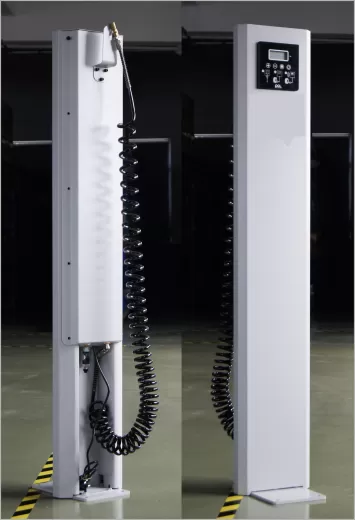 Custom Metal Chassis Fabrication Service for Chassis & Cabinets Manufacturing
SHARP CENTURY offers comprehensive sheet metal cabinet fabrication services in chassis/cabinets design, manufacturing, and assembly.
2D/3D Design, DFM Optimized
Secure Welding, Protective Coatings
UL, CE, RoHS, Fire & IP Rated
Low MOQ & Prototype Samples Available
Services
Custom Chassis Cabinets: Reliable Protection for Electronic and Industrial Systems
Sheet Metal Processing Services cover the entire process from design to finished products, involving various processes and customized needs. The following is a classification and description of the core service content, applicable to various industries.
Custom Fit Design
- Sharp Century provide 2D and 3D drawing creation.
- Optimize flat pattern development (considering bend factors and material utilization).
- DFM (Design for Manufacturability): Evaluate design rationality to avoid manufacturing difficulties.
Strong Protection
Use quality metal materials
Weld or assemble parts securely
Apply protective surface coating
Services
Metal Chassis Cabinet Fabrication Process
The chassis and cabinets are key structural components in the fields of electronic devices, communication base stations, and industrial control. Their manufacturing processes need to balance precision, strength, heat dissipation, and other functions. Below is the manufacturing process of chassis and cabinets from design to finished products, as well as the key technical points:
Design & Planning: Create CAD drawings to plan the size, shape, and features of the cabinet.
Cutting: Use laser or punch machines to cut sheet metal into the required parts.
Bending & Forming: Bend the cut parts into shape using CNC press brakes.
Welding & Assembly: Weld or fasten the parts together and install needed components.
Surface Finishing: Clean and coat the cabinet (e.g., powder coating) to prevent rust and improve appearance.
For more details, please visit our capability page to explore our full range of sheet metal fabrication capabilities.
Applications of Precision Sheet Metal Fabrication for Chassis Cabinet
SHARP CENTURY's metal cabinet fabrication services for chassis and cabinets are widely used across a variety of industries. With a focus on durability, precision, and adaptability, our solutions are suitable for applications that require reliable structural support, effective protection of internal components, and clean, professional finishes. Whether for industrial equipment, electronic systems, or customized enclosures, our fabricated chassis and cabinets are designed to meet diverse functional and environmental requirements.
Metal Cabinet Fabrication FAQs
Common Issues and Solutions in Chassis Cabinets Fabrication:
Why does the cabinet panel sometimes bend or warp during production?
This usually happens due to too much heat from welding or using thin metal. To fix it, use the right material thickness and control the heat during welding.
Why don't the cabinet parts fit together properly?
Poor fit often comes from inaccurate cutting or bending. Using precise machines like laser cutters and checking measurements carefully can solve this issue.
How can I stop the cabinet from rusting or getting surface damage?
Rust or damage can come from dirty surfaces or poor coating. Clean the metal well before coating and use quality paint or plating to protect it.
As a custom metal fabrication supplier, we will do our best to meet all the needs of customers.
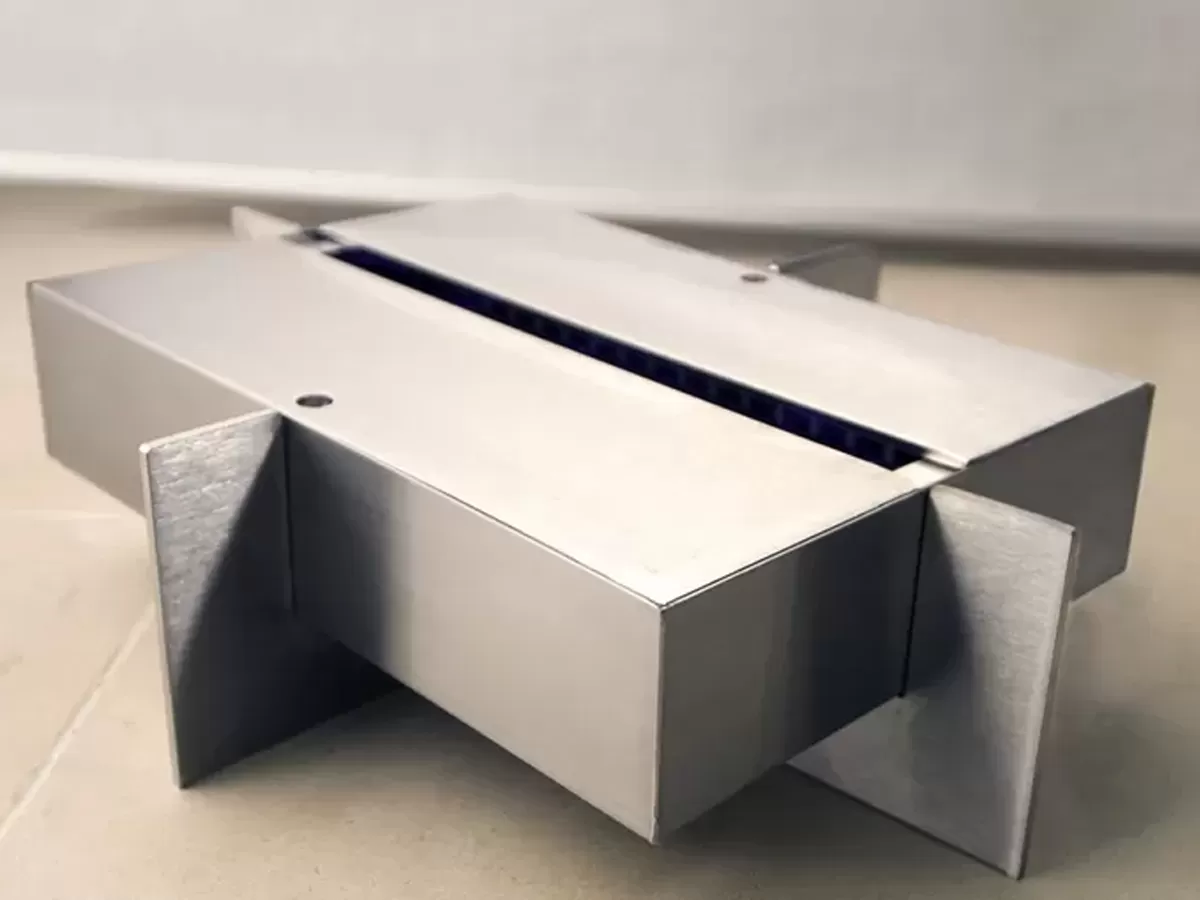 Custom Sheet Metal Fabrication Service for Assembly Desining & Manufacturing
SHARP CENTURY offers comprehensive fabrication services in sheet metal manufacturing parts design, manufacturing, and assembly.
Premium Materials – Stainless steel, carbon steel, or aluminum for corrosion resistance and strength.
Advanced Surface Finishing – Powder coating, brushed or polished finishes for protection and aesthetics.
Custom Design Support – 2D/3D drawings and DFM optimization to simplify manufacturing.
Certified & Compliant – UL, CE, RoHS, Fire-Resistant, and IP-Rated options for global applications.
Fast Turnaround & Small Batch Friendly – Quick prototypes and consistent production for every order.
Services
Precision-Engineered Sheet Metal Parts for Industrial-Grade Durability
Sheet Metal Processing Services cover the entire process from design to finished products, involving various processes and customized needs. The following is a classification and description of the core service content, applicable to various industries.
CAD/CAM Design
- As a specialized bespoke metal fabricationcompany, SHARP CENTURY provides 2D and 3D drawing creation.
- Optimize flat pattern development (considering bend factors and material utilization).
- DFM (Design for Manufacturability): Evaluate design rationality to avoid manufacturing difficulties.
Rapid Prototyping
- Validate design feasibility through sheet metal processing or 3D printing.
- Small batch trial production (to verify processes and assembly).
Services
Sheet Metal Fabrication and Assembly Process
Sheet metal manufacturing is a manufacturing process that involves transforming metal sheets into desired components through processes such as cutting, bending, stamping, and welding. Below is a description of the standard sheet metal processing workflow:
Design and Process Planning: CAD design and Design for Manufacturability (DFM) analysis.
Material Preparation: Material selection → Sheet cutting.
Forming Processes: Bending; Stamping; Rolling.
Joining Processes: Welding; Riveting.
Surface Treatment: Painting; Plating; Brushing/Polishing, etc.
Quality Inspection: Dimensional inspection; Functional testing.
Sharp Century's advanced sheet metal prototype service provides superior metal components tailored to your needs.
Applications of Sheet Metal Parts
SHARP CENTURY's sheet metal parts fabrication services support a wide range of demanding industries and product types where strength, fit-up, and consistent quality matter. Typical applications include components and enclosures for rail transit systems, sheet metal parts used in nuclear-related equipment and supporting infrastructure, and various cabinets and housing assemblies for industrial and commercial use. We can adapt materials, thicknesses, and finishing requirements to meet different functional needs, from structural parts to protective covers and panels.
Sheet Metal Parts Fabrication and Assembly FAQs
Common Issues and Solutions in Sheet Metal Manufacturing:
Why does warping occur during sheet metal bending, and how can it be prevented?
Warping often happens due to uneven stress distribution during the bending process. It can be caused by improper material handling, inaccurate tooling setup, or inconsistent thickness. To prevent warping, ensure uniform material thickness, use the correct V-die size and punch radius, and apply precise bending force. Using simulation software can also help predict and eliminate potential warping issues before production.
What causes burrs on cut edges, and how can they be minimized?
Burrs are rough edges or protrusions formed during cutting, typically due to worn-out tools, incorrect cutting speed, or unsuitable die clearance. To minimize burrs, regularly maintain cutting tools, adjust cutting parameters based on material type and thickness, and ensure appropriate die clearance. Laser or waterjet cutting methods can also significantly reduce burr formation compared to mechanical cutting.
Why do cracks appear during deep drawing, and how can they be avoided?
Cracks during deep drawing usually result from excessive material stress, improper lubrication, or using material with poor ductility. To avoid this, choose high-quality, ductile sheet metal, apply proper lubrication to reduce friction, and optimize the punch and die design for smooth material flow. Gradual forming with intermediate annealing steps may also help when working with more challenging materials.
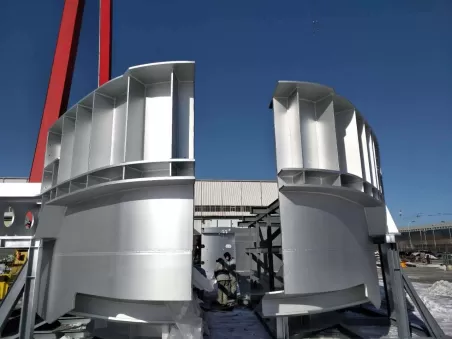 Custom Mining Fabrication Services: Precision Equipment Design & Manufacturing
As a top sheet metal fabrication company, Sharp Century offers professional prototype metal mining fabrication services in mining machinery design, manufacturing, and assembly.
Boost Efficiency and Safety with Our Advanced Mining Equipment Fabrication Solutions
In the field of mining fabrication machinery manufacturing, ensuring quality, improving efficiency, and enhancing safety are the core objectives. The following aspects cover the design and manufacturing processes:
Design Optimization
Sharp Century utilizes lightweight materials such as high-strength alloy steels and composite materials to reduce equipment weight and lower energy consumption.
Strengthening of Critical Components
Applying heat treatment processes to load-bearing components to enhance their wear resistance and fatigue strength.
Efficiency Improvement
Deploying welding robots and CNC machining centers to increase traditional processing efficiency by over 30%.
Standardization
Establishing detailed assembly and inspection procedures to minimize human errors.
Sheet Metal Processing
The process includes material cutting → forming → joining → surface treatment → assembly and final assembly. We are ready to offer premium services in sheet metal fabrication and assembly.
Mining Equipment Fabrication Process
The manufacturing of mining machinery is a complex process that encompasses design, material processing, assembly, and testing. Below is a comprehensive introduction to the entire manufacturing process, integrating key technologies such as sheet metal processing, welding, and machining:
- Requirement Analysis and Design Phase
- Raw Material Preparation and Pre-treatment
- Core Manufacturing Process
Sheet Metal Manufacturing: Material cutting → Forming → Joining
Heavy Structural Welding: Welding process selection (welding method); Quality control (pre-welding and post-welding preparations).
Machining: Machine tool processing (turning and milling); Special processes (heat treatment and surface hardening).
Assembly and Final Assembly: Sub-assembly; Final assembly and debugging.
Surface Treatment and Coating
Quality Inspection and Testing
Sharp Century offers robust sheet metal fabrication capabilities to produce components that meet strict quality and performance standards.
Mining Equipment Fabrication FAQs
Common Issues and Solutions in Mining Equipment Fabrication:
Excessive burrs on material cutting edges
Optimize cutting parameters (reduce laser power, increase cutting speed).
Cracking or excessive springback after sheet metal bending
Adjust the bending radius (typically ≥1.5 times the sheet thickness); Orient the bending direction perpendicular to the material grain direction (avoid bending along the rolling direction); Implement bending compensation.
Welding distortion causing assembly misalignment
Use segmented welding to reduce localized heat accumulation; Employ welding fixtures to secure the workpiece; Perform mechanical straightening after welding.
Coating peeling or bubbling after painting
Perform sandblasting before painting; Control the painting environment; Use epoxy zinc-rich primer to enhance adhesion.
Excessive flatness deviation in large sheet metal components
Apply vibration stress relief after welding to eliminate residual stresses; Store large flat components vertically to prevent deformation due to self-weight.
If you want to know more about mining maintenance & fabrication services, please visit our website.